When pressure rises, leaders do not suddenly become someone else. They become more of who they already are.
That is what makes pressure so revealing.
In calm conditions, most leaders can appear measured, thoughtful and strategic. But when the stakes go up, timelines shrink, and uncertainty increases, the real pattern shows up. Thinking speeds up. Assumptions harden. Communication narrows. Decisions become more reactive. That is when mindset stops being a nice idea and starts becoming a leadership advantage.
This is where I believe the most important shift sits for leaders: not in learning how to remove pressure, but in learning how to think differently inside it.
Because pressure does not just test capability. It distorts perception.
And if you cannot see clearly, you cannot lead clearly.
That is a big part of what sits underneath my Mind the Gap keynote work. The gap between what is happening and what we think is happening. The gap between intention and impact. The gap between reaction and judgement. Leadership under pressure is often shaped in that gap.
The leaders who handle pressure best are not always the most confident, the loudest, or the quickest. More often, they are the ones who can catch their thinking, challenge what is driving it, and change how they respond before a poor decision gathers momentum.
That is where better leadership starts.
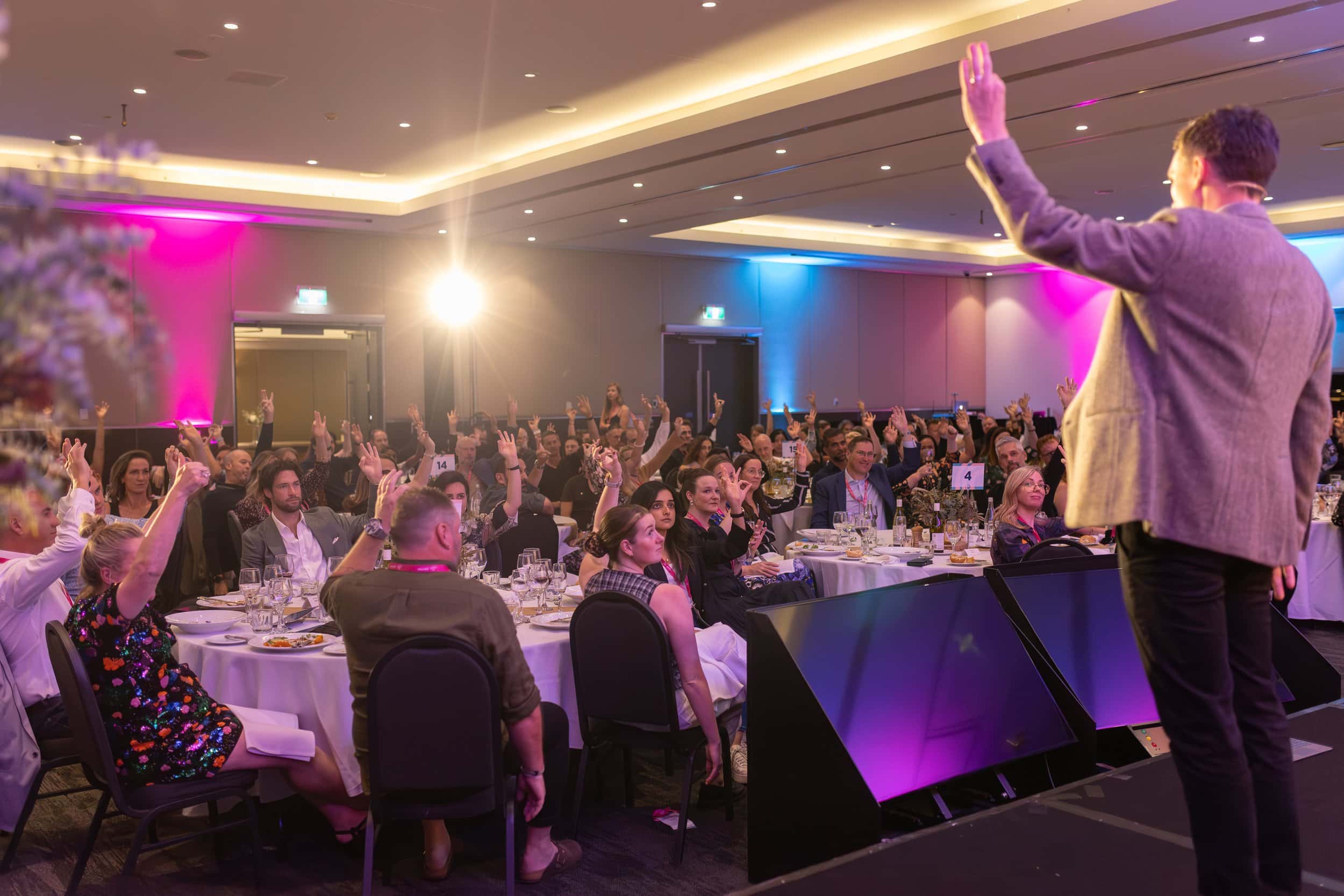
[caption id="" align="alignnone" width="4800"] Audience at a Sydney leadership keynote engaging in an interactive session on decision-making under pressure [/caption]Why capable leaders still make poor decisions under pressure
Poor decisions are rarely made because leaders do not care.
They are usually made because pressure changes the quality of thinking.
A smart leader under pressure can become overly certain.
A capable executive can become defensive.
A strong team can become narrow, political or rushed.
Not because they have lost their ability, but because pressure changes what they notice, how they interpret events, and what feels most urgent.
That is why I often say that leadership is not just about behaviour. It is about perception. If your perception gets distorted, your judgement usually follows.
Under pressure, leaders tend to fall into a few common traps:
They confuse urgency with importance
Not everything that feels urgent deserves a rushed decision. But in pressured environments, immediacy can start to feel like evidence.
They mistake confidence for clarity
A fast answer can sound strong in the room, but speed does not always equal quality. Sometimes it is simply anxiety dressed up as decisiveness.
They protect themselves instead of the decision
This is subtle, but it matters. Leaders start asking, often unconsciously, “How do I avoid looking wrong here?” instead of “What is the best call here?”
That shift is costly.
Because once ego, fear or identity gets tangled up in the decision, the quality of thinking drops. You stop seeing the situation as it is and start seeing it through the lens of self-protection.
This is one of the reasons I talk so often about the importance of becoming wonderfully uncomfortable. If you want to lead well, you have to build the capacity to stay in uncomfortable territory without rushing to relieve it. Discomfort is often where the truth is. It is also where better thinking lives.
The difference between reaction and judgement
One of the biggest problems in leadership is that people often reward reaction because it looks decisive.
A leader speaks quickly, moves quickly, lands on a view quickly, and everyone assumes that is strength.
Sometimes it is.
Sometimes it is just unexamined thinking.
Reaction is immediate. It is fast, emotional, protective and often driven by the need to make the discomfort stop.
Judgement is different.
Judgement has space in it.
Not endless delay. Not hesitation disguised as sophistication. Just enough space to ask better questions, notice distortion, and make a decision from a clearer place.
That distinction matters.
Because in pressured moments, the first interpretation is often incomplete. The first emotion is often loud, but not especially useful. The first answer is often attractive because it resolves tension, not because it improves the outcome.
This is where Catch it. Challenge it. Change it. becomes practical.
Catch it
Catch the first thought, the first assumption, the first emotional story you are telling yourself.
“This is a disaster.”
“They are not aligned.”
“We need to act now.”
“This conversation is going badly.”
“I cannot show uncertainty here.”
The first step is noticing the pattern before it drives the decision.
Challenge it
Ask whether that interpretation is accurate, useful or complete.
What facts do I actually have?
What am I assuming?
What else could be true?
What part of this is pressure, and what part is reality?
Challenge does not mean talking yourself out of action. It means refusing to hand over your judgement to your first reaction.
Change it
Choose a better response.
That may mean reframing the problem.
It may mean slowing the conversation down.
It may mean asking one more question.
It may mean being clearer.
It may mean having the hard conversation you were about to avoid.
This is the leadership mindset shift. Not pretending pressure is not there, but learning how not to be led by it.
Three mindset shifts leaders can make immediately
When leaders are under pressure, they do not need vague encouragement. They need a method.
Here are three shifts that make an immediate difference.
1. Shift from proving to seeing
Under pressure, many leaders move into performance mode. They want to prove they are capable, prove they have the answer, prove they are in control.
The trouble is, when you are busy proving, you are usually not seeing clearly.
The better move is to focus on seeing.
What is actually happening here?
What are we missing?
What problem are we really dealing with?
What is being said, and what is not being said?
This is a Mind the Gap move. Great leadership often comes down to seeing the gap between surface appearance and underlying reality.
2. Shift from speed to directiom
This is where the GO method matters.
Pressure makes leaders want to move. Movement feels productive. Activity feels reassuring. But not all movement is progress.
The real question is not just whether we are going fast. It is whether we are going well.
The GO method is a useful reminder in pressured moments: get clear on where you are trying to go before you become obsessed with motion.
For leaders, that means asking:
What outcome are we actually aiming for?
What matters most here?
What would a good decision achieve?
Are we moving with intent, or are we just reacting?
A lot of poor leadership is not caused by laziness. It is caused by unexamined momentum.
3. Shift from comfort to useful discomfort
Leaders often think their job is to reduce discomfort in the room. Sometimes it is. Often it is not.
Sometimes the discomfort is the work.
The uncomfortable question.
The awkward truth.
The tension that has been avoided.
The piece of feedback nobody wants to give.
The admission that the first plan is not working.
This is where Wonderfully Uncomfortable becomes a leadership principle, not just a phrase. Growth, clarity and better decision-making often require the willingness to stay with discomfort long enough for better thinking to emerge.
Leaders who can do that create stronger teams. They do not rush to false reassurance. They do not confuse calm with quality. They allow enough tension for truth to surface.
That is a serious advantage.
What this means for executive teams
Pressure does not only affect individual leaders. It reshapes the behaviour of executive teams.
A team under pressure can become performative very quickly. People start speaking to protect position. Meetings become narrower. Challenge gets softened or delayed. Consensus gets prioritised over scrutiny.
On the surface, the team may still look aligned. Underneath, the quality of thinking is often deteriorating.
This is where leadership mindset becomes cultural.
Executive teams need shared ways of catching distorted thinking before it becomes strategy.
That might sound like:
“Let’s catch the assumption we are making here.”
“What are we reacting to versus what do we know?”
“What gap are we missing?”
“Are we trying to feel better quickly or decide better?”
“What would change if we challenged our first interpretation?”
Those kinds of questions change the room.
They move teams away from performance and towards judgement. They create a culture where challenge is not disloyalty, uncertainty is not weakness, and better thinking matters more than faster posturing.
That is a huge part of what strong senior leadership teams need right now. Not more noise. Not more urgency. Better thinking under pressure.
How this shows up in conferences and leadership events
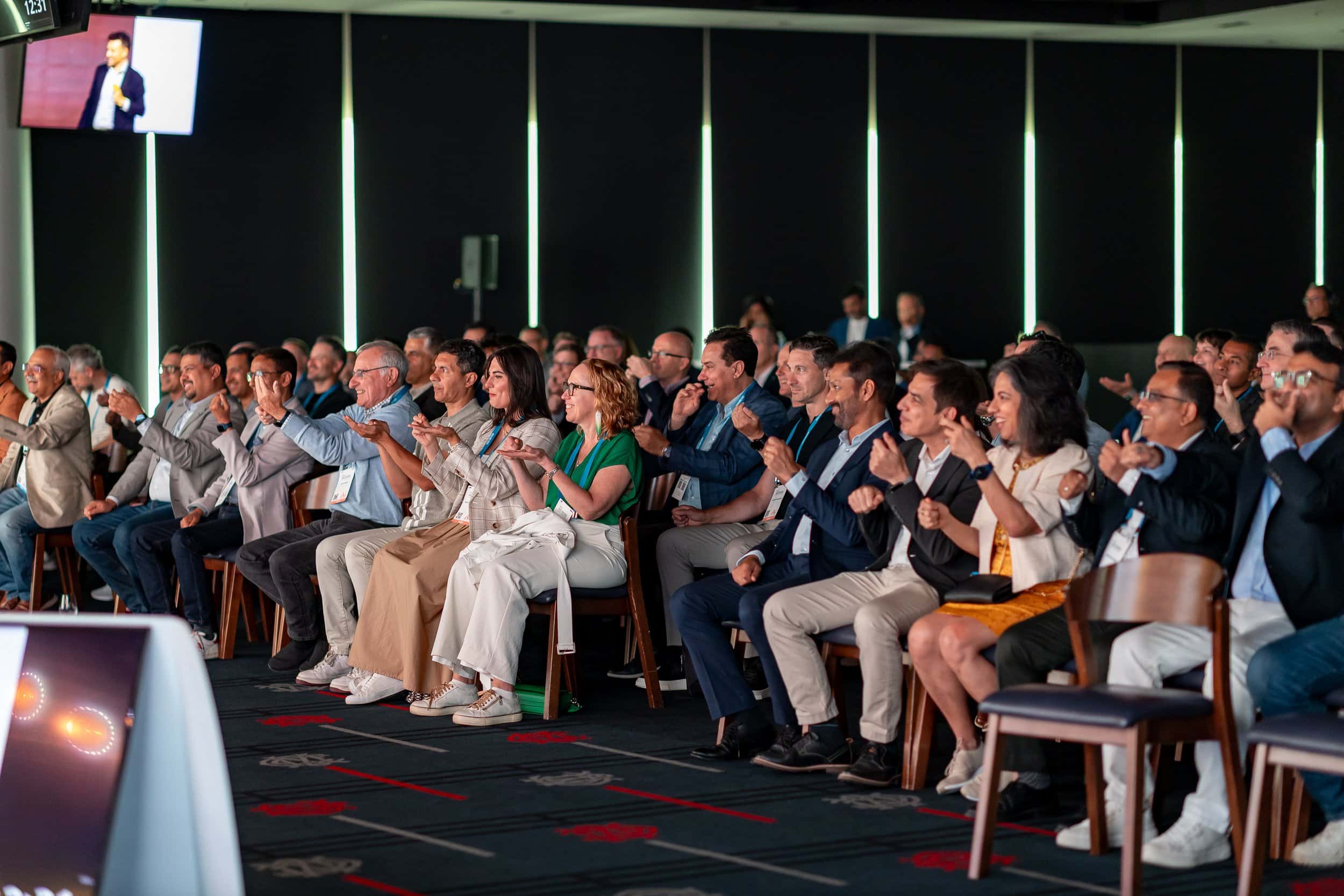
This is why this conversation lands so strongly in keynote settings.
Leadership audiences are not short on information. What they are often short on is a useful framework for what happens to thinking when the pressure is on.
That is where keynote content becomes valuable when it is practical.
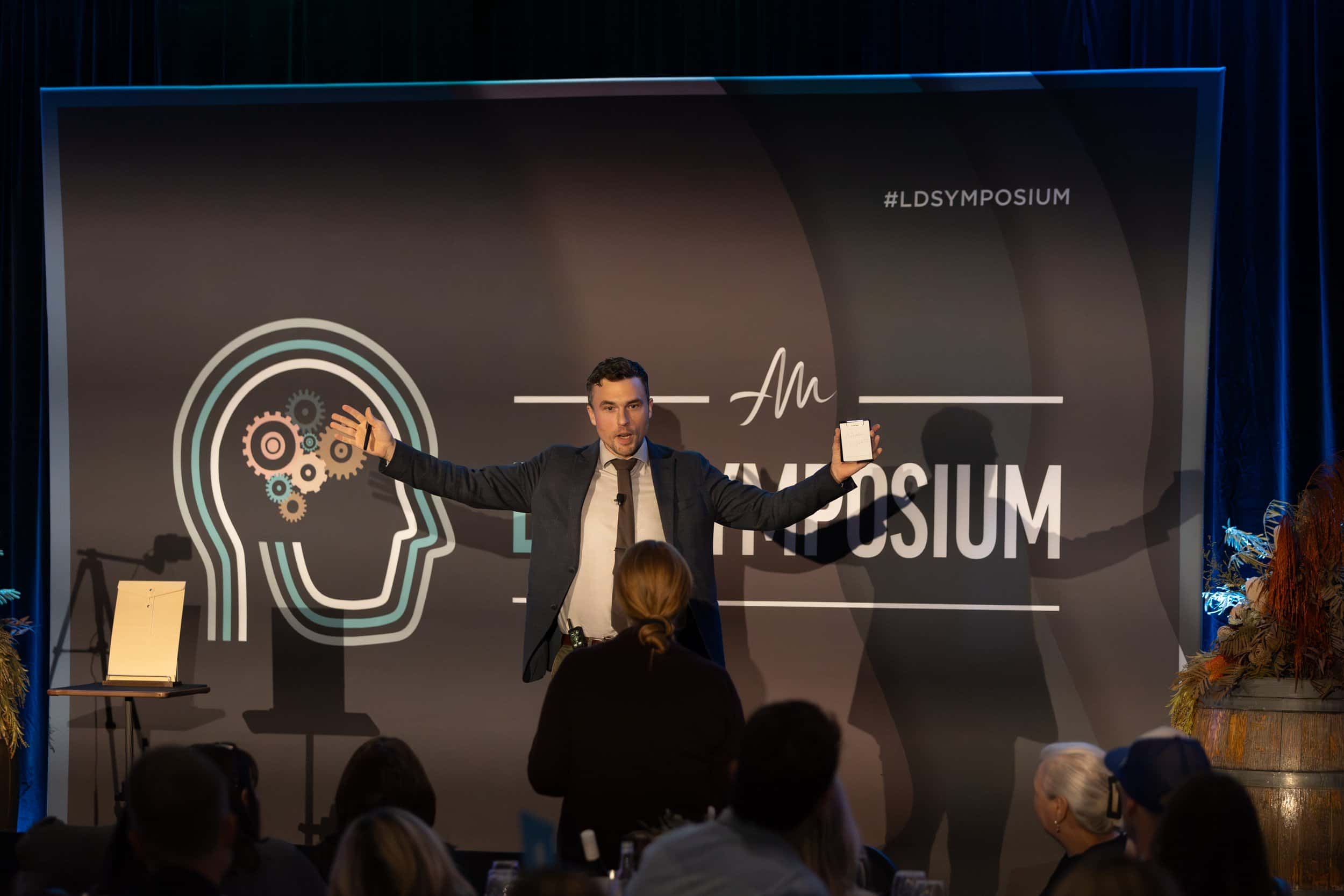
In sessions like Mind the Gap, the conversation is not just about leadership in the abstract. It is about how perception shapes performance. How assumptions close options. How leaders misread themselves, misread others, and misread situations under pressure. Most importantly, it is about what to do about it.
Similarly, the idea of becoming wonderfully uncomfortable resonates because most meaningful leadership growth does not happen in polished conditions. It happens when leaders can stay steady enough to face what they would rather avoid.
For conference organisers and leadership teams, this matters because it is commercially relevant.
Pressure affects:
decision-making
communication
trust
team performance
change execution
strategic judgement
leadership credibility
So this is not mindset as a soft extra. It is mindset as a performance lever.
That is what makes it such a strong keynote theme for senior leaders, executive teams and organisations navigating uncertainty, growth, change or complexity.
Practical leadership application
If you lead people, this is already relevant to your day.
It shows up when results miss and the temptation is to blame too quickly.
It shows up when a conversation becomes tense and you start managing the discomfort instead of addressing the issue.
It shows up when you walk into a meeting with a fixed view and mistake certainty for leadership.
It shows up when the room wants speed, but the situation needs judgement.
In those moments, the goal is not to become emotionless. The goal is to lead your thinking before your thinking leads you.
A practical way to do that is:
Use Catch it. Challenge it. Change it.
Catch the first story.
Challenge whether it is true or useful.
Change your response to something more deliberate.
Choose wonderful discomfort
Do not rush to relieve tension just because it is there.
Sometimes the discomfort is showing you exactly where the leadership work is.
That is the real shift.
Not becoming less human under pressure. Becoming more intentional.
Key takeaways
Pressure does not just test leaders. It distorts perception.
Capable leaders can still make poor decisions when they confuse reaction with judgement.
Catch it. Challenge it. Change it. is a practical way to improve thinking in pressured moments.
The GO method helps leaders focus on direction, not just movement.
Becoming wonderfully uncomfortable is often necessary for honest conversations and better leadership decisions.
Strong executive teams build shared habits that protect thinking quality under pressure.
Leadership mindset is not abstract. It shapes communication, judgement, trust and performance.
Related insights
You may also want to explore:
Home – www.andrewnunn.com
Mind the Gap keynote – Andy Nunn keynote speaking
Speaking and contact enquiries – contact Andy about your event
LinkedIn – Link
Social and Podcast links
Instagram: andythementalist
Tinyshifts Podcast: Why We Can’t Do The Things We Say We Are Going To Do