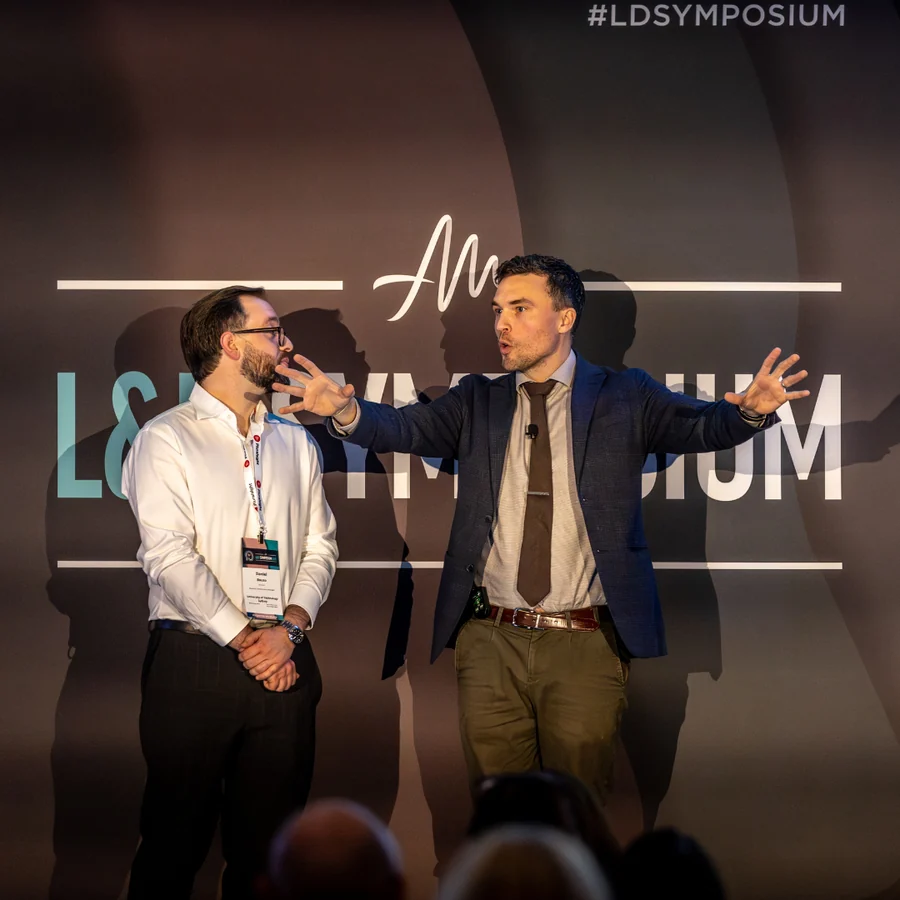
You’ve watched a few speaker reels. Everyone looks engaging. The rooms are full, the music is good and there’s plenty of applause.
Now you need to choose someone for your event.
A reel can help you get a feel for a speaker. It can’t answer every question about how their session will work for your audience. That takes a closer look at the content, the delivery and the job you need the keynote to do.
If you’re comparing speakers for a Sydney conference, leadership day or company offsite, here’s a practical way to build your shortlist.
Write the job before you choose the person
Start with one sentence: “We need this session to help this audience think about ___ so they can ___.”
That might mean helping managers question assumptions before a difficult conversation. It might mean giving a team a shared starting point for discussing change. Or your programme may need celebration and entertainment rather than a leadership session. Be honest about that. These are different jobs.
You aren’t setting a guaranteed outcome for one talk. You’re deciding what the session should contribute to the wider event.
If several stakeholders want different things, have that conversation before the shortlist grows. Otherwise you may end up comparing a technical specialist, a leadership speaker and an entertainer as though they offer the same thing.
Ask what the audience will work with
Topic labels are broad. Two speakers can both cover “leadership” while delivering very different sessions.
Ask each person to explain one idea the audience will explore and how it connects to the situation in your organisation. What question might people take back to work? What would they be invited to notice or practise?
Listen for an answer you can explain to a colleague without borrowing the speaker’s promotional language. If you’re still unsure, ask for a concrete example. A relevant example is more useful than a longer list of promised benefits.
Also ask where the session’s boundaries are. A keynote about human judgement in AI-assisted work is not the same as technical training in building AI systems. Knowing what a speaker does not cover is part of assessing fit.
Look beyond the highlight reel
If available, watch a longer section of a session. Notice how the speaker develops an idea between the memorable moments. Can you follow the explanation? Is audience participation connected to the subject? Would this style suit your room?
Then read relevant client feedback. A testimonial can tell you about someone’s experience, but it isn’t proof that the same session will produce a particular business result for your organisation.
For my own work, you can explore client case studies alongside the leadership keynote page. Use that evidence to decide whether the approach fits, rather than treating recognisable client names as the decision on their own.
Explore the fit in a conversation
Describe your audience and one challenge they are facing. Then ask how the speaker would approach it.
You're not asking for a finished session before booking. You're checking whether there is a sensible connection between their expertise and your brief. Do they ask questions? Do they distinguish what they know from what they would need to learn? Can they explain how examples and participation might be adapted?
If you are worried about a particular aspect of the delivery, say so. Perhaps the audience dislikes being put on the spot, or the programme already includes several high-energy sessions. It is better to discuss that than hope everyone means the same thing by “interactive”.
Compare the practical requirements too
Confirm availability, speaking time, location and the proposed fee. Ask what is included and which travel, accommodation or production costs remain to be agreed. Being Sydney-based should not be treated as a promise about someone’s availability or travel arrangements.
Check the room and AV requirements, the briefing process and who will be your contact. If you want to record, livestream or reuse any part of the session, discuss permission and terms before assuming it is included.
Make sure the final proposal matches what you discussed. Missing details aren't necessarily a reason to rule a speaker out, but they are questions to resolve before you commit.
Use the same shortlist questions
For each candidate, write a short answer to these questions:
- What is the session’s central idea, and why is it relevant to our audience?
- What evidence have we actually seen of their delivery?
- What would participants be able to reflect on or try afterwards?
- What will be tailored, and what remains part of the established session?
- What are the agreed timing, cost, production and recording arrangements?
- What important questions are still unanswered?
Decide which criteria matter most before you compare the answers. A scoring sheet can organise the discussion, but it shouldn't hide a serious mismatch. If the content doesn't fit, an excellent reel doesn't fix that.
Choose a session you can explain
The final test is simple: can you explain why this speaker fits this event, beyond “I liked them” or “they’re well known”?
I’m a Sydney-based keynote speaker and mentalist. In The Human Advantage, I use interactive experiences to explore assumptions, leadership and the way people respond to change. If that fits the conversation you want to open, explore my Sydney keynote speaking or share your event brief.
And if your event needs a different kind of session, let the brief lead you there. The point of a shortlist is to find the right fit, not to justify the first name on it.